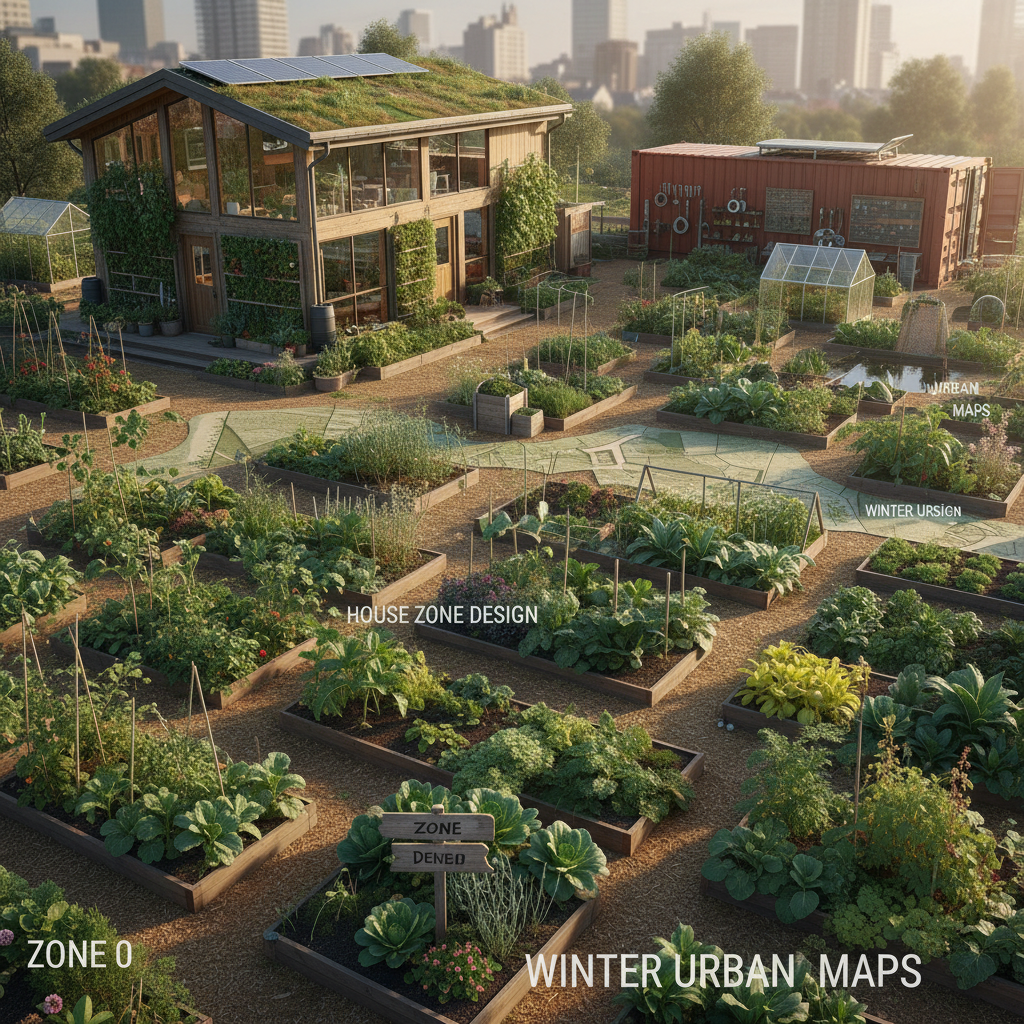
Urban Permaculture Zone 0: Winter House Design Mapping Tips
Imagine this: It's a chilly winter morning in your city neighborhood. Snow dusts your sidewalk, and your house sits like a lonely box amid concrete and bare trees. You're dreaming of a permaculture paradise, but where to start?
Urban permaculture Zone 0 is your home base – the heart of your design. Winter mapping lets you see it clearly, without summer's leafy distractions. No more guesswork; you'll spot opportunities for native plants, energy savings, and daily yields right at your door.
This guide gives beginners practical steps. You'll learn to create winter urban maps that set up your house zone design for success. Grab a notebook, coffee, and let's map your way to a thriving Zone 0.
Why Focus on Urban Permaculture Zone 0 in Winter?
Zone 0 in permaculture is your dwelling – the most intensively used area. In urban settings, it's your house, balcony, or apartment entry, demanding frequent access and high yields.
Why winter? Bare landscapes reveal truths hidden by growth: true sun paths, wind patterns, water runoff. Summer vines fool you; winter honesty guides smart designs.
This ties to permaculture ethics: Care for the Earth by stacking functions (e.g., plants that insulate your home). Care for People with easy harvests. Fair Share by using natives that support local wildlife.
For small-scale urbanites like you – gardeners, homesteaders – it's empowering. Your winter urban maps become blueprints for resilience, cutting bills and boosting biodiversity. Planning now means spring implementation flies.
Assess Microclimates Around Your Urban Zone 0 House
Winter strips away illusions, perfect for microclimate mapping in house zone design.
Step 1: Walk Your Perimeter
Bundle up and circle your home multiple times daily. Note warm spots (south-facing walls melt snow first) versus frost pockets (north shades).
Use a simple scale: Hot (above freezing), Cool (freezing), Cold (icy). Mark on paper or phone sketch.
Step 2: Wind and Shelter Mapping
Observe wind – does it howl down alleys or buffer against fences? Test with pinwheels or flags.
In urban permaculture Zone 0, plant windbreaks here. Natives like Eastern Redbud (Cercis canadensis) thrive in sheltered micros, providing early flowers and habitat.
Pro Tip for Your Map
When placing this on your winter urban map, layer observations by date/time. This reveals patterns, like afternoon sun on east patios – ideal for heat-loving guilds.
Connect to principles: Observe and interact. Your data informs Earth care by matching plants to sites, slashing failures.
Expect 20-30 minutes daily for a week. Celebrate small wins – you've just boosted your design IQ!
Map Sun Paths and Shadows for House Zone Design
Sun rules permaculture. Winter's low angle casts long shadows, key for urban Zone 0 layouts.
Trace Shadows Hourly
Pick solstice-near days. Use sticks or chalk to mark shadows from your house, roof, neighbors' buildings every hour from 9 AM-3 PM.
South sides get prime sun – perfect for passive solar gains and light-needy plants.
Identify Sunny Harvest Zones
Map 'sun maps': Full sun (6+ hours), partial (3-6), shade. Your doorstep planter? Test it.
Native Plant Matches
Full sun: Serviceberry (Amelanchier arborea) for berries, birds, and mulch. Partial: Spicebush (Lindera benzoin) for butterfly larvae and tea leaves.
When designing house zone, consider how sun interacts with different areas. Avoid shading paths – stack functions for people care.
Urban twist: Account for winter streetlights or reflections off windows for extra light.
This prevents mistakes like shading your hugelkultur bed. Yields soar when sun aligns with needs.
Track Water Flows on Your Winter Urban Maps
Snowmelt and rain reveal drainage – gold for Zone 0 water harvesting.
Watch Runoff Paths
After storms, trace water from roof, driveway, to street. Note puddles (swales potential) and fast flows (erosion risks).
Urban roofs dump gallons – capture it!
Map Low and High Points
Low spots collect water: Great for rain gardens with natives like Blue Flag Iris (Iris versicolor), filtering urban runoff.
High points? Berms direct flow.
Integrate Greywater
Sketch home outflows (sinks, laundry). Divert to Zone 0 planters legally.
Permaculture principle: Catch and store energy. Natives like Switchgrass (Panicum virgatum) handle wet feet, stabilizing soil.
On your winter urban map, draw blue arrows for flows. In spring, dig swales accordingly – no floods, more food.
Bonus: Insulates foundations, cutting heat loss.
Plan Native Guilds and Human Elements in Zone 0
Guilds are plant teams supporting each other – Zone 0 stars.
Design Doorstep Guilds
Central: Fruit tree/shrub like Pawpaw (Asimina triloba) for unique fruits. Companions: Comfrey for mulch, natives like Wild Ginger (Asarum canadense) for groundcover.
Pathside: Herbs like Bee Balm (Monarda fistulosa) – medicinal, pollinator magnet.
Layer for Yields
Vertical: Trellises on walls with native grapes (Vitis riparia). Horizontal: Edible borders.
Human Flows
Map your routines: Entry, trash, compost path. Place high-use plants nearby – ethics in action.
Winter mapping shines: Bare soil shows guild spots. Test with pots first.
House zone design thrives on natives – low water, high resilience. Your urban oasis emerges.
Key Takeaways
-
Urban permaculture Zone 0 is your house – map it winter for honest insights on sun, wind, water.
-
Observe daily: Microclimates guide native placements like Cercis canadensis in shelters.
-
Trace shadows and flows on winter urban maps to optimize house zone design.
-
Build guilds with natives (Amelanchier arborea, Lindera benzoin) for stacked functions and ethics.
-
Use map-based design tools to visualize your data and turn sketches into actionable plans.
-
Celebrate small steps: Your doorstep yields await.
Next Steps
-
Grab paper/phone; map your Zone 0 this week – 15 mins/day.
-
Explore online resources for permaculture design.
-
Input data, add 3 natives – observe potential outcomes.
-
Read next: 'Zone 1 Veggie Beds' or 'Urban Native Trees'. Questions? Comment below!
Your permaculture journey blooms now.
(Total: 1219 words)
Related Reads: Zone 1 Design Basics, Native Urban Plants Guide, Permaculture Ethics Deep Dive
Curated by
Daniel Crawford
Regenerative Systems Designer