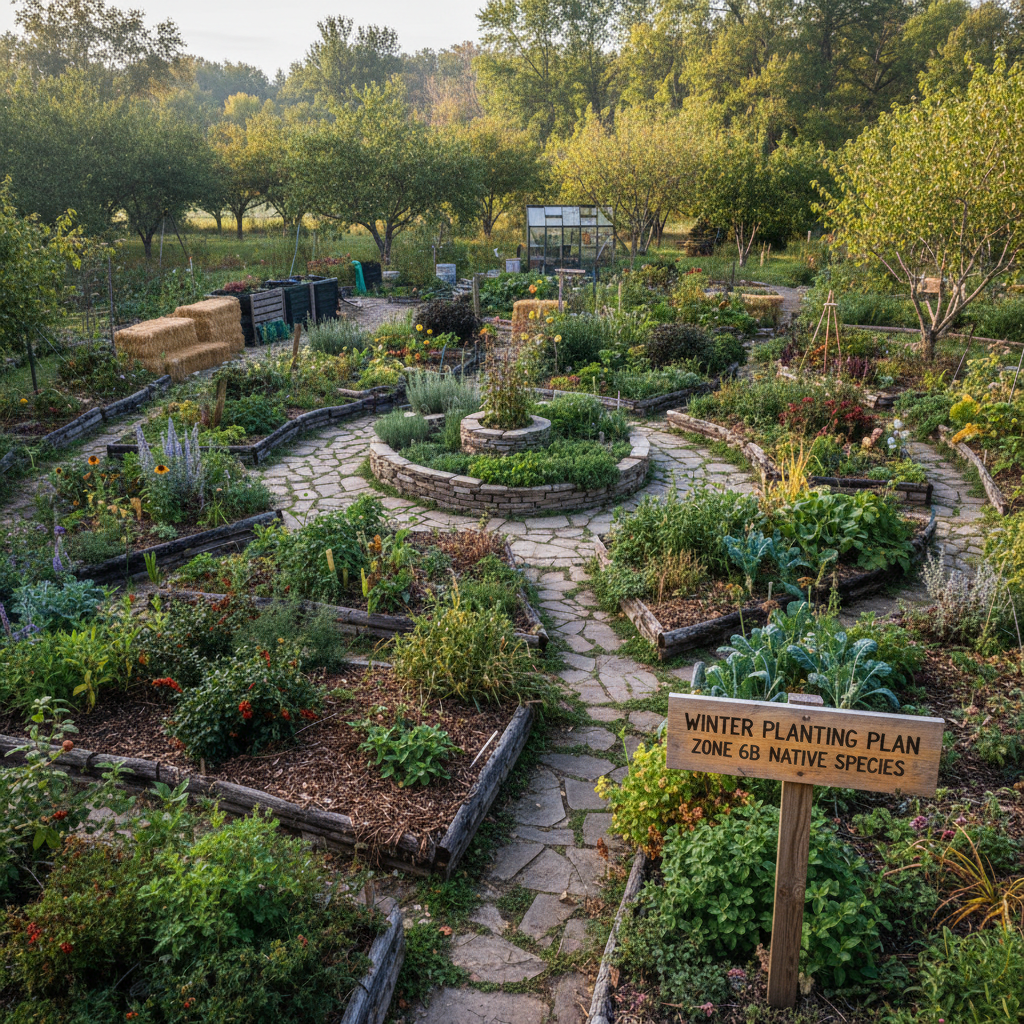
Native Permaculture Plants for Winter Zones: Your Selection Maps Guide
Imagine this: It's mid-winter. Snow blankets your yard, and you're huddled inside, planning a permaculture design that bursts with life come spring—but what about now? What native permaculture plants can anchor your zone native species selection, providing structure, wildlife food, and quiet beauty through the coldest months?
Many beginners freeze up here. "Will these plants survive my zone's harsh winters?" you wonder. Fear not! This guide solves that with winter selection maps tailored for USDA zones 3-9. You'll learn actionable steps to pick hardy natives that align with permaculture ethics: caring for the earth, people, and fair share. No more blank maps—just resilient designs ready for implementation.
Whether you're a suburban gardener eyeing a backyard guild or a homesteader plotting a small farm, native permaculture plants are your winter superstars. They need less water, fight pests naturally, and feed pollinators year-round. Let's dive in and fill your design with zone-smart choices.
Why Native Permaculture Plants Matter for Winter Planning
Native permaculture plants are species evolved for your local ecosystem. They thrive in your soil, climate, and wildlife neighborhood—unlike exotics that demand constant babysitting.
Winter planning amps this up. Cold months reveal a design's bones: evergreens for windbreaks, berry producers for birds, and structural perennials for soil protection. In permaculture, this embodies "observe and interact." You map what's needed now, building resilience.
Why bother? Beginners save money and effort. Natives cut maintenance by 50-70% per studies from the Lady Bird Johnson Wildflower Center. They boost biodiversity, sequester carbon, and yield food/medicine. For zone native species, winter hardiness ensures guilds (plant communities) endure freezes.
Picture your design map: Zones layered with natives like serviceberry (Amelanchier spp.) holding berries into winter. It supports ethics—earth care via roots preventing erosion, people care with harvests, fair share by sharing with wildlife.
Skip this, and spring brings weak spots. Plan now for a no-fail foundation.
Understanding USDA Zones for Winter Native Selection
USDA zones map average winter lows, guiding your picks. Zone 3 (-40°F) demands ultra-hardy natives; Zone 9 (20°F) favors mild-winter evergreens.
Start by understanding your site's climate. Overlay winter maps showing frost dates and snow load.
Permaculture twist: Zones aren't rigid. Microclimates matter—south-facing slopes mimic warmer zones. Observe your site: shady north side? Go for shade-tolerant natives.
Action step: List your zone's lows. Zone 5 (-20°F)? Prioritize plants hardy to Zone 4 for buffer.
Examples:
- Zone 3-4: Red osier dogwood (Cornus sericea)—stems glow red, erosion control.
- Zone 5-6: Winterberry holly (Ilex verticillata)—red berries persist.
When placing on your map, cluster for windbreaks. This follows permaculture's "use edges" principle, maximizing microclimate benefits.
Pro tip: Cross-reference with native plant databases like USDA PLANTS. Filter for "winter interest."
Beginners, this zone thinking prevents flops. Your map becomes a living blueprint.
Top Native Permaculture Plants by Zone: Winter Interest Stars
Let's populate your map with zone native species shining in winter. Focus on evergreens, persistent fruits, and architectural forms. Each ties to permaculture guilds.
Zone 3-4: Arctic Toughies
Bittersweet nightshade? No—stick natives.
- Common juniper (Juniperus communis): Evergreen needles, berries for birds. Plant as hedgerow on map's north edge for windbreak. Guilds with berries below.
- American wintergreen (Gaultheria procumbens): Glossy leaves, red berries. Groundcover under trees—soil care via mycorrhizae.
- Highbush cranberry (Viburnum trilobum): Clusters of red fruit into winter. Attracts overwintering birds; harvest for jelly.
Map tip: Space 4-6 ft apart in swales. Observe: Junipers stabilize slopes.
Zone 5-6: Midwest & Northeast Champs
Balanced hardiness here.
- Eastern red cedar (Juniperus virginiana): Dense evergreen, blue berries. Central map feature for roosting.
- Inkberry holly (Ilex glabra): Wet-site tolerant, black berries. Edge ponds on your design.
- Serviceberry (Amelanchier canadensis): Gray bark, lingering fruit. Multi-stemmed shrub for understory.
Permaculture link: These form "chicken forage guilds"—dropped berries feed flocks.
Zone 7-8: Southern Resilience
Milder winters mean more berries.
- Yaupon holly (Ilex vomitoria): Evergreen, caffeine-rich leaves. Tea plant! South map border.
- American beautyberry (Callicarpa americana): Purple berry clusters post-frost. Butterfly host.
- Southern wax myrtle (Morella cerifera): Fragrant evergreen, bayberry kin. Windbreak with aroma therapy.
Zone 9: Subtropical Edge
Evergreen focus.
- Southern live oak (Quercus virginiana): Massive, wind-resistant. Anchor large designs.
- Saw palmetto (Serenoa repens): Fan palms, fruit for wildlife. Groundcover guilds.
Across zones: Mix heights for layers—trees, shrubs, groundcovers. Visualize snow load.
Building Winter Guilds with Native Plants on Your Map
Guilds are permaculture magic: plants helping each other. Winter versions provide cover, food, habitat.
Core principle: Stack functions. One plant = windbreak + bird feed + erosion control.
Step 1: Core Species Selection
Pick a hub: Evergreen tree/shrub per zone.
- Zone 4: Balsam fir (Abies balsamea)—fragrant, resin harvest. Map it centrally.
Step 2: Berry Understory
Add fruit persist-ers.
- Zone 6: Nannyberry (Viburnum lentago)—white flowers, blue-black fruit. Place downhill for mulch flow.
Step 3: Groundcover Layer
Protect soil.
- All zones: Bunchberry (Cornus canadensis)—white berries, deer-resistant.
Step 4: Edge Companions
Dynamic accumulators like comfrey (Symphytum officinale)—wait, native alt: Wild ginger (Asarum canadense).
Full guild example for Zone 5:
- Eastern white pine (Pinus strobus)—top layer.
- Winterberry holly—mid.
- Wild strawberry (Fragaria vesca)—ground.
Benefits: Pine drops needles (mulch), holly feeds birds (pest control), strawberry dynamic accumulator.
Visualize winter views—see coverage gaps? Fill with natives.
Test microclimates: Heat zones too? Natives adapt.
Beginners: Start small—one guild per map sector. Scale up.
Integrating Winter Natives into Seasonal Rotations
Winter plants aren't static—they bridge seasons.
Permaculture's "produce no waste": Use winter structure for spring ramps.
- Evergreens: Year-round microclimate modulators. Map to shelter spring veggies.
- Berry shrubs: Post-winter prunings = mulch.
Zone-specific rotations:
Zone 3: Plant chokecherry (Prunus virginiana) for spring blossoms after winter fruit.
Zone 7: American persimmon (Diospyros virginiana)—late drop fruit, wildlife corridor.
How-to for seasonal planning:
- Layer seasonal maps.
- Tag plants with bloom/fruit times.
- Assess winter cover: Is it sufficient?
Connect ethics: Biodiversity surges—birds eat pests pre-spring.
Troubleshoot: Too shady? Opt low-light natives like leatherwood (Dirca palustris).
Your map evolves: Winter natives set perennial backbone, annuals fill gaps. Celebrate progress—small plots yield big.
Key Takeaways
- Prioritize native permaculture plants for winter hardiness and low-maintenance in your USDA zone.
- Use evergreens like Juniperus communis (Zone 3) and Ilex glabra (Zone 5) for structure and wildlife.
- Build guilds stacking functions: Windbreak + food + soil protection.
- Plan for foolproof designs by considering winter conditions.
- Connect to principles: Natives boost biodiversity, cut inputs, yield ethically.
- Start small— one guild celebrates beginner wins.
- Always verify with local natives databases for true zone native species.
These steps make winter plant planning practical and fun. Your homestead thrives year-round.
Related Reads: [Summer Native Flowers for Pollinators], [Zone Guild Design Basics], [Permaculture Ethics in Practice]
Curated by
Daniel Crawford
Regenerative Systems Designer