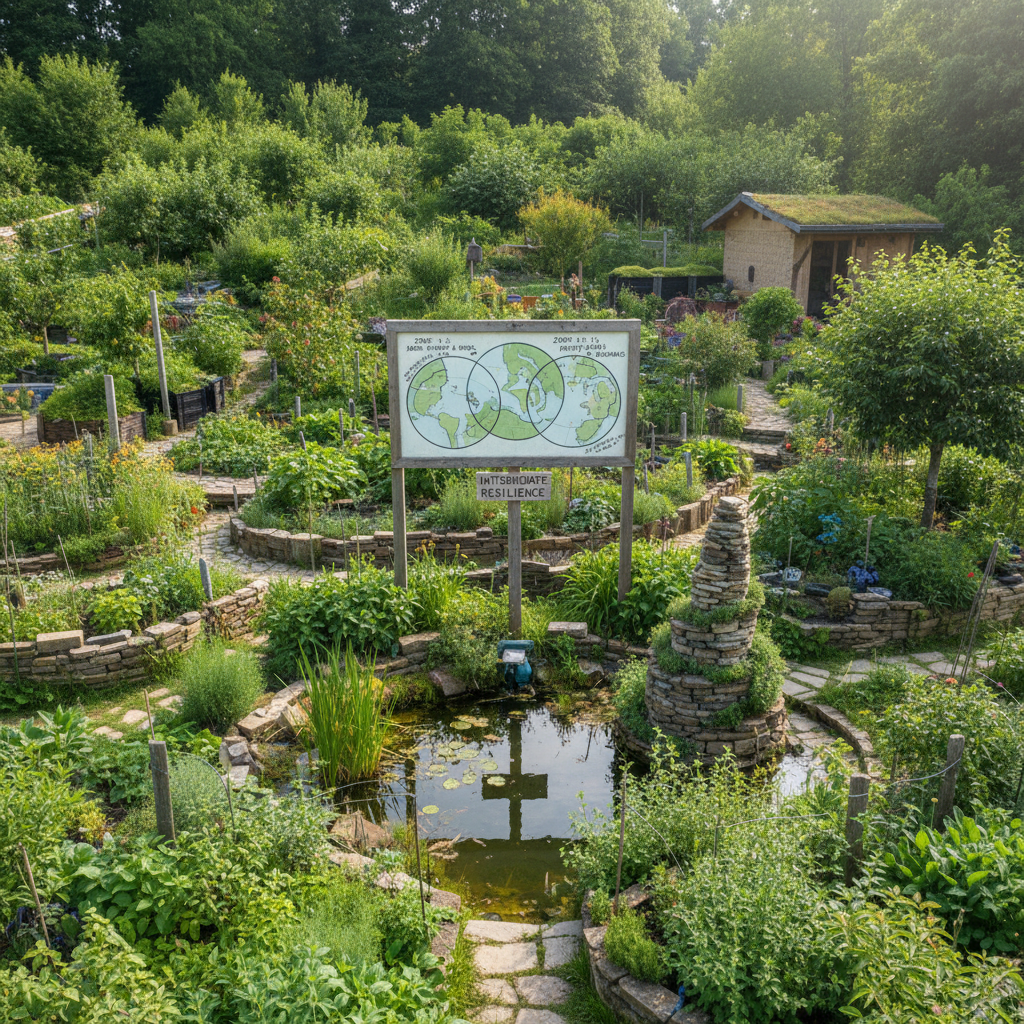
Climate Resilient Permaculture: Adaptive Zone Design Mapping
Imagine this: You're staring at your interactive map, proud of your carefully laid-out permaculture zones. Then, a freak heatwave wilts your Zone 1 veggies, or heavy rains erode your Zone 2 orchard paths. Sound familiar?
Climate resilient permaculture isn't just a buzzword—it's your shield against wild weather swings. With adaptive zone design mapping, you tweak traditional zones to handle droughts, floods, and storms. This approach keeps your small farm, homestead, or suburban plot producing, even as climate shifts.
You're an intermediate designer, ready for practical steps. No overwhelming theory here—just actionable ways to map resilience into your plans. Let's turn vulnerability into strength, one zone at a time.
Why Adaptive Zone Design Mapping Matters for Climate Resilient Permaculture
Traditional permaculture zones radiate from your home: Zone 0 (house), Zone 1 (daily herbs), up to Zone 5 (wilderness). But climate change blurs those lines with erratic weather.
Adaptive zone design mapping flexes these zones. You overlay climate risks—like shifting hardiness zones or extreme events—onto your map. This creates 'intermediate resilience' buffers, blending zones for multi-threat protection.
Why bother? Resilient designs cut losses by 30-50%, per studies from the Permaculture Research Institute. They save water, boost biodiversity, and align with Earth Care by using natives that thrive locally.
For you, small-scale grower, it means less replanting and more harvesting. It's easy: Input your location, and watch risk layers appear. Your plans become future-proof, honoring permaculture ethics while stacking yields.
Assess Your Site's Climate Risks for Zone Adaptation Maps
Start with data, not guesses. Access your base map.
Pull Local Climate Projections
Consider your region's climate projections from reputable sources: +2°C temps, 20% more rain variability.
Note extremes: Drought frequency up 40%? Flood zones expanding? Mark these as shaded risk bands on your zone adaptation maps.
Map Microclimates
Walk your site (or use aerial views). North slopes stay cooler; south faces bake. Valleys pool cold air or floodwater.
Tag these in Zone 0-1 overlaps. For intermediate resilience, widen Zone 1 to include sheltered spots. This follows Observe & Interact—permaculture's first principle.
Inventory Current Vulnerabilities
List assets: Water sources, soil types, existing plants. Note these observations: 'Clay soil prone to waterlogging' or 'Exposed ridge for wind.'
Score risks 1-5. High wind? Buffer Zone 2 with hedges. Your map now shows hot zones needing adaptation.
Redesign Zones with Intermediate Resilience Buffers
Zones aren't rigid—make them adaptive. Think layered defense.
Blur Zone Edges for Flexibility
Traditional zones are pie slices. For climate resilient permaculture, curve them: Extend Zone 1 (intensive beds) into Zone 2 (perennials) with 10-20m buffers.
Visualize boundaries. Place swales in overlap areas to catch runoff. This 'intermediate resilience' zone handles moderate extremes without full redesign.
Prioritize Zone 0-2 for High Traffic
Your home (Zone 0) anchors everything. Surround with windbreaks: Native Aronia melanocarpa (chokeberry) or Cornus sericea (red osier dogwood).
Zone 1 gets polycultures: Tomatoes under beans, interplanted with drought-tolerant natives like Echinacea purpurea (purple coneflower). Map paths wide for wheelbarrows during wet spells.
Scale for Your Space
Suburban plot? Stack vertically: Trellises in Zone 1 double as shade. Homestead? Zone 2 orchards with understory guilds. Visualize layouts quickly.
Select Native Plants and Guilds for Adaptive Zones
Natives are resilience superstars—they evolved here.
Build Resilient Guilds by Zone
Zone 1: Daily harvest guild—Allium schoenoprasum (chives), Fragaria vesca (wild strawberry), nitrogen-fixer Trifolium repens (white clover). Drought? They go dormant, rebound.
Zone 2: Fruit tree hubs. Apple (Malus domestica) with native understory: Amelanchier alnifolia (saskatoon serviceberry), Sambucus canadensis (elderberry). Flood-tolerant roots.
Consider native guilds and their companion plants. Visualize their placement on your map.
Match Plants to Risk Layers
Hot/dry risks? Asclepias syriaca (common milkweed) or Rudbeckia hirta (black-eyed Susan). Wet zones? Iris versicolor (blue flag iris).
Diversity rule: 3-5 species per guild. This obtains a yield while building soil life. Celebrate your wins— even a 10x10 bed stacked with natives crushes monocrops.
Integrate Water, Soil, and Energy Strategies
Resilience flows from systems thinking.
Water Harvesting Across Zones
Keyline swales in Zone 2-3: Contour your topographic map. Native Juncus effusus (soft rush) lines them for filtration.
Rain gardens in Zone 1 catch roof runoff. Tanks in Zone 0 for droughts. Adapt: Widen for 20% more rain.
Soil Building for Extremes
Compost everything. In clay? Hugelkultur mounds with Rubus idaeus (red raspberry). Sandy? Mulch thick with leaves.
Map amendments: Lime pockets for acid rain. Adjust berms to prevent erosion.
Energy Flows: Wind, Sun, Shade
Wind tunnels? Native hedgerows (Viburnum trilobum—highbush cranberry). Solar gain? Deciduous canopies cool summer, warm winter.
Zone 5 wilderness feeds chop-and-drop. Use Least Change—enhance nature's patterns. Your map visualizes flows, spotting bottlenecks.
Add Redundancy and Diversity for Bulletproof Designs
No single failure point.
Multi-Functional Elements
One plant, many roles: Comptonia peregrina (sweet fern) fixes N, repels pests, erosion control. Place in Zone 1-2 transitions.
Animals too: Chickens in mobile coops (Zone 2), ducks for wet zones.
Succession Planning
Perennials dominate post-Year 1. Map phased planting: Annuals first, natives mature.
Test scenarios: 'Drought Year 3'—see survivors.
Monitor and Iterate
Annual reviews. Adjust zones as climate shifts. Edge effect boosts yields 2x—maximize overlaps.
This embodies permaculture's Integrate Rather Than Segregate. Your adaptive map evolves with you.
Key Takeaways
- Climate resilient permaculture starts with adaptive zone design mapping: Overlay risks on your base map for intermediate resilience buffers.
- Blur zones strategically: 10-20m overlaps handle extremes, prioritizing Zone 0-2.
- Prioritize natives: Guilds like Amelanchier spp. and Echinacea purpurea thrive in shifts.
- Layer water/soil strategies: Swales, mulch, keylines across zones.
- Build redundancy: Multi-yield plants, diversity, succession for no-fail systems.
- Iterate with tools: Visualization makes adaptation easy and visual.
These steps turn weather worries into abundant yields. Small changes, big resilience.
Next Steps
- Access your base map, start a climate resilience project.
- Overlay your local projections—takes 10 mins.
- Redesign one zone today; plant a native guild tomorrow.
Check related posts: Native Plant Guilds, Swale Design Basics. Questions? Forum awaits. Build that resilient future!
Curated by
Daniel Crawford
Regenerative Systems Designer