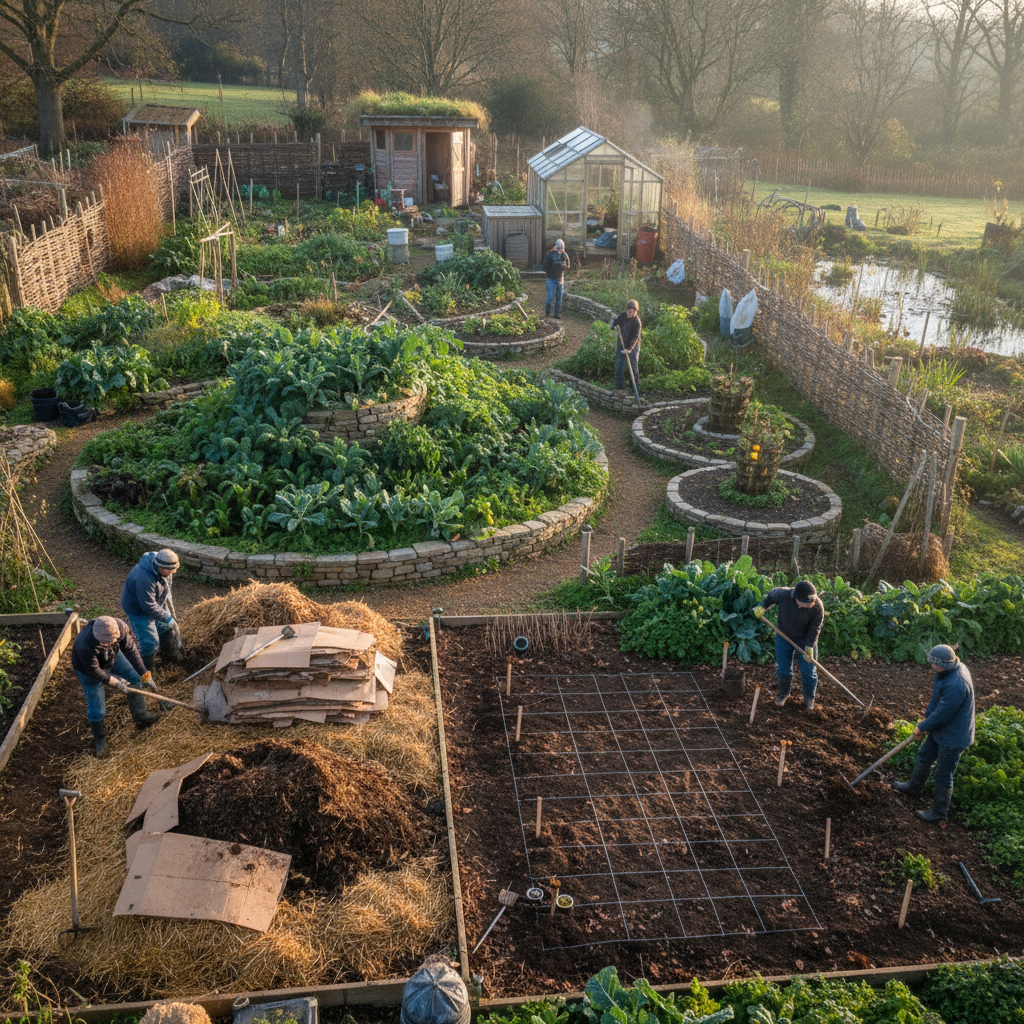
Permaculture Soil Building Maps for Winter Plans
Imagine this: It's a chilly winter afternoon. You're sipping hot cocoa, gazing at your bare garden beds or that weedy corner of your suburban yard. Spring feels far away, but your soil? It's screaming for attention.
You're a beginner homesteader or small-scale gardener. You want a thriving permaculture setup, but where to start? Permaculture soil building maps solve this. They let you visualize soil improvements right now, during winter's quiet months.
No digging required yet. Just smart planning on interactive maps. You'll layer strategies for rich, living soil that feeds your native plants and future harvests. Say goodbye to tired dirt and hello to a resilient food forest.
This approach celebrates small wins. Whether you're plotting a backyard guild or a mini-farm zone, winter soil mapping turns planning into excitement. Ready to map your soil success? Let's dive in.
Why Permaculture Soil Building Matters in Winter
Soil is the heart of permaculture. It's alive with microbes, fungi, and nutrients that support every plant in your design. But depleted soil? It leads to weak crops, pests, and frustration for beginners.
Winter is prime time for permaculture soil building. Ground freezes halt growth, but your brain doesn't. Mapping now means targeted prep: no guesswork come spring. You'll build soil structure, fertility, and water-holding capacity.
This ties to permaculture ethics. Earth care demands regenerating soil naturally—no chemicals. Fair share means nutrient-dense food for your family. People care? Healthier you from better eats.
Beginner soil prep shines here. Small actions like marking mulch zones compound. Studies show organic matter boosts soil organic matter by 1-2% yearly, transforming clay or sand.
On your map, winter soil mapping reveals patterns. Spot low spots for swales, shady areas for natives. It's actionable design that scales from balcony pots to acres. Your future self thanks you.
Assess Your Soil: Winter Mapping Basics for Beginners
Start with what you have. Winter soil mapping begins with observation—no tools needed beyond your eyes.
Walk your site. Note bare spots, erosion, puddles. Is it compacted from summer foot traffic? Clay-heavy and cracked? Sandy and dry?
Grab a soil test kit if possible (cheap online). Test pH, nitrogen, phosphorus. But don't stress—permaculture fixes imbalances naturally.
On your map, draw zones first. Zone 1: kitchen garden, high traffic. Zone 2: orchard or herbs. Zone 5: wild natives.
Mark soil types by color-coding. Red for poor clay, green for decent loam. Add notes: "Compacted dog path—needs deep mulch."
This zone-based thinking aligns with permaculture principles. Observe and interact before acting. Beginners: celebrate your site's uniqueness. Native species like Amorpha fruticosa (false indigo bush) thrive in clay.
List issues in a table on your map:
| Soil Issue | Zone | Winter Fix | |------------|------|------------| | Compaction | 1 | Sheet mulch | | Low fertility | 2 | Cover crops | | Drainage poor | 3 | Swales |
Short paragraphs keep it simple. Your map becomes a living soil blueprint.
Layer Organic Matter: Sheet Mulching on Your Winter Map
Sheet mulching builds soil like lasagna. It's beginner gold for permaculture soil building—no tilling, just layers.
Why winter? Materials abound: fallen leaves, straw bales cheap post-harvest.
Step 1: Mow or cut weeds. Layer cardboard or newspaper. Wet it down.
Step 2: Add 4-6 inches compost or manure. Source locally—chicken poop from neighbors?
Step 3: Top with 6-12 inches wood chips, leaves, straw. Native leaf litter best.
On your map, outline beds. Place sheet mulch icons in Zone 1 veggies, Zone 2 perennials. Note depths: "12in chips for fruit trees."
Connect to principles: Catch and store energy (mulch insulates). Use edges (layer diversity).
Benefits? Worms devour layers, aerating soil. Holds moisture—key for dry springs. Natives like Rubus spp. (native blackberries) root in happily.
Pro tip: Integrate guilds. Under mulch, plant comfrey (Symphytum officinale) for chop-and-drop.
Scale small: Suburban plot? 4x8 bed. Homestead? Full Zone 2.
Track progress: Map smothered weeds turning to humus by spring. Pure magic for beginners.
Cover Crops and Native Green Manures for Soil Prep
Cover crops are soil's winter blanket. They prevent erosion, fix nitrogen, and feed microbes.
Beginners: Pick easy natives or adapted. Crimson clover (Trifolium incarnatum) or hairy vetch (Vicia villosa). Natives? Partridge pea (Chamaecrista fasciculata) for nitrogen.
Winter sow in mild climates. Broadcast seeds on tilled or no-till beds.
How-to:
- Clear debris.
- Rake lightly.
- Sow 1-2 weeks before frost.
- Lightly rake in, water.
Crush and leave as mulch spring.
On your map: Designate Zone 2 paths or Zone 3 fields. "Clover in orchard understory." Integrates with natives like Lupinus perennis (wild lupine).
Principles: Produce no waste (crops become mulch). Use renewable resources.
Science: Legumes host rhizobia bacteria, adding 50-150lbs nitrogen/acre.
Mix it up:
- Annuals: Oats (Avena sativa) for biomass.
- Perennials: Native buffalo grass (Bouteloua dactyloides).
- Zone 1: Dwarf varieties.
Winter soil mapping tip: Note sowing dates. Map layers show overlaps with guilds. Your soil drinks it up.
Zone-Based Manure and Compost Integration
Animals and compost turbocharge soil. Winter plans zone them smartly.
Zone 1: Chickens till beds, poop fertilizer. Map coops near kitchen.
Zone 2: Compost piles for orchard. Hot compost kills weeds.
Zone 3-5: Larger manure from goats, rotated paddocks.
Build compost: 1/3 greens (kitchen scraps), 2/3 browns (leaves). Turn monthly.
Apply winter: Side-dress trees, top beds.
Map visualization: Place pins for piles. Draw flow: "Manure from Zone 1 chickens to Zone 2 compost."
Natives love it: Milkweed (Asclepias syriaca) explodes in amended soil.
Principles: Integrate rather than segregate.
Beginner hack: Worm bin for balcony. Vermicompost gold.
Safety: Age manure 6 months—no burn.
Visualize yields: Fertile soil = bumper natives, no inputs.
Water and Contour Mapping for Soil Health
Soil building needs water retention. Winter maps contours perfectly—bare ground shows flows.
Observe rain paths. Mark high ground, low spots.
Design swales: Shallow ditches on contour, mulch-filled.
Hugelkultur mounds: Log bases, soil over, for Zone 2.
On map: Draw contour lines. Place swales above beds.
Natives: Switchgrass (Panicum virgatum) stabilizes.
Principles: Catch and store energy (water as resource).
Build soil moisture 20-30%.
Key Takeaways
- Map first: Winter soil mapping reveals issues for targeted permaculture soil building.
- Layer smart: Sheet mulching and cover crops like native Partridge pea build soil effortlessly.
- Zone it: Place high-maintenance preps in Zone 1, wild natives in Zone 5.
- Go native: Species like Lupinus perennis fix nitrogen without imports.
- Interactive maps: Visualizing soil prep makes beginner soil building fun.
- Principles guide: Observe, integrate, regenerate—small steps yield big soil health.
These nuggets turn plans into reality. Celebrate your progress!
Next Steps
- Assess and map soil this week.
- Pick one strategy—sheet mulch a bed.
- Source materials locally.
Spring you will thrive. Questions? Comment below!
Internal links: Permaculture Zones 101, Native Cover Crops Guide, Guild Planting Basics
Curated by
Daniel Crawford
Regenerative Systems Designer