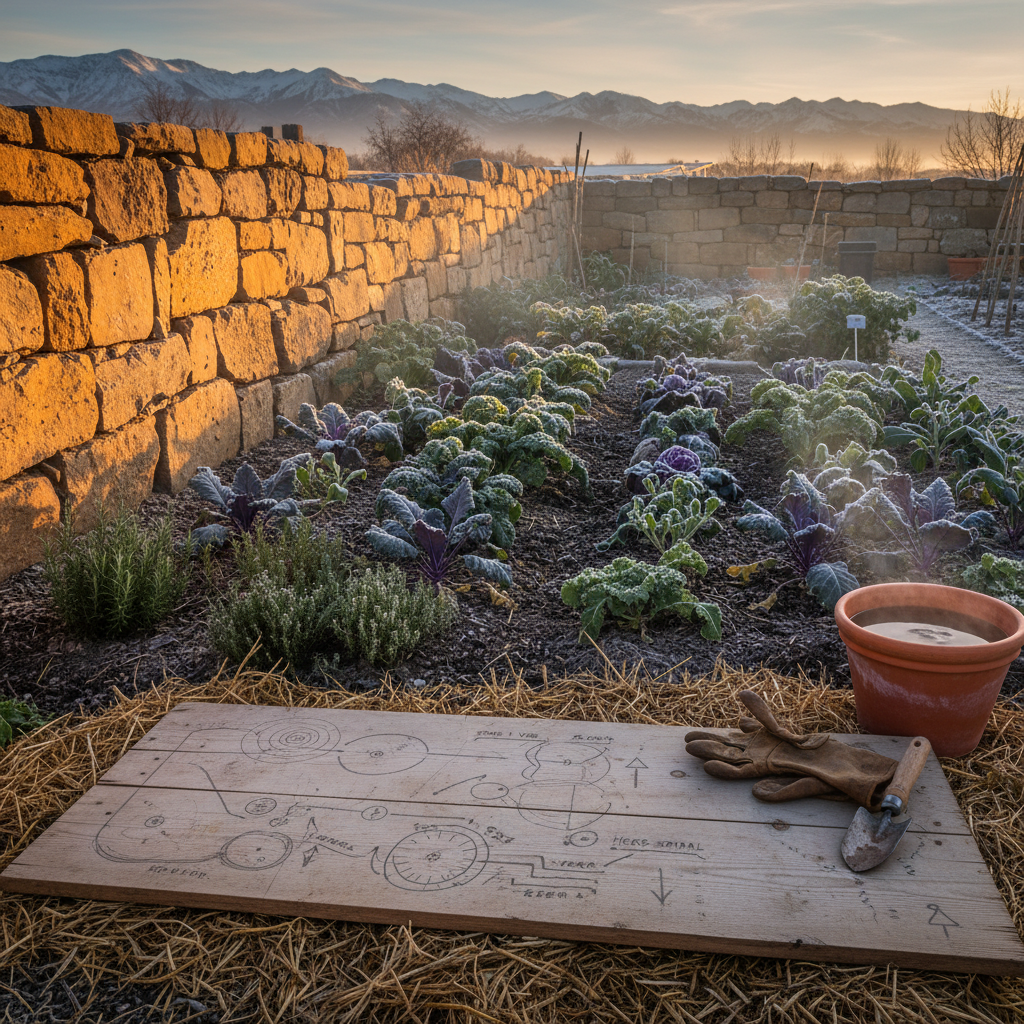
Thermal Mass Permaculture: Zone 0-1 Intermediate Winter Maps
Picture this: It's mid-winter, snow dusts your homestead, and a biting wind howls outside. You step into your home or greenhouse, and it's toasty warm—no extra heating bills, no frozen pipes. That's the power of thermal mass permaculture in Zones 0-1.
As an intermediate designer, you're past basics but ready to refine your plans. Cold snaps hit hard in Zone 0 (your home) and Zone 1 (daily-use gardens). Without thermal mass, you lose precious winter sun.
This solves that. You'll map winter energy flows, stack functions with natives, and build passive heat storage. Small changes—like rock walls or water features—turn your design resilient. No more guessing; get actionable winter maps for real results on your suburban lot or farmstead.
What is Thermal Mass Permaculture and Why Zone 0-1 Winters?
Thermal mass permaculture uses dense materials to absorb, store, and release heat. Think rocks, water, or earth soaking up daytime sun, then radiating warmth at night. It's a core strategy for energy efficiency.
In permaculture, Zones 0-1 are high-priority: your living space and most-visited areas. Zone 0 is the house; Zone 1 holds herbs, chooks, and paths. Winters demand focus here—sun angles shift low, winds dominate sectors.
Why prioritize? Observe and interact: cold drains resources, stressing plants and people. Thermal mass applies Earth Care by cutting fossil fuels. It stacks functions—heat plus habitat, erosion control.
Intermediate winter maps reveal site-specific patterns. Unlike summer plenty, winter scarcity needs precision. Native species thrive with this microclimate tweak, following People Care and Fair Share ethics. Your design becomes a self-regulating system.
Mapping Winter Sun and Wind in Zone 0-1
Start with observation—the first permaculture principle. Grab paper, pencil, and a compass. Sketch your Zone 0-1 boundary: house walls, paths, patios, greenhouse.
Track winter sun paths. In the Northern Hemisphere, it arcs low south (15-30° elevation at noon). Mark shadows hourly from solstice to equinox. Use a stick in the ground as a gnomon—simple solar clock.
Note obstructions: trees, buildings. Deciduous natives like Acer rubrum (red maple) drop leaves, allowing max sun access. Evergreens (Juniperus virginiana, eastern red cedar) block north winds.
Wind mapping next. Deploy flags or windsocks for a week. Cold fronts often northwest. Identify prevailing sectors. Edges matter—funnel effects amplify chill.
Your intermediate winter map layers this: sun paths (curved lines), wind arrows, Zone 0-1 zones shaded. Color-code heat sinks (south-facing) vs. buffers (windward). This reveals opportunities—like a sunny wall for thermal mass.
Action: Spend 3 winter days observing. Redraw weekly as patterns emerge. Integrate microclimates: south walls warmer by 5-10°C.
Selecting Thermal Mass Materials for Zone 0-1
Choose materials by specific heat capacity and density. Water (4.18 J/g°C) stores most per volume but needs containment. Stone (0.8-2.0 J/g°C) excels in walls, paths.
For Zone 0: Retrofit south-facing walls with rammed earth or stone veneer. Dark colors absorb more—paint black if natural stone's light. Stack functions: wall stores heat, supports climbers.
Zone 1 paths: Use gravel (river rock) or bricks laid sun-exposed. They warm feet, melt snow passively. Avoid concrete—low mass, high albedo.
Water features shine: barrels or ponds behind windbreaks. Line with black pond liner. In cold climates, fishless or deep enough for Nymphaea odorata (native water lily) overwintering.
Earth berms: Pile soil south of structures. Plant natives like Andropogon gerardii (big bluestem) for erosion control and added biomass insulation.
Sourcing: Local stone minimizes transport ethics. Calculate needs: 1m³ rock holds ~100kWh heat seasonally. Test small—build a 1m wall first.
Pro tip: Succession planning. Start with movable barrels, evolve to permanent.
Enhancing with Native Plants and Edge Design
Plants amplify thermal mass via microclimates. Position deciduous natives (Cornus florida, flowering dogwood) to shade summer, sun winter.
Evergreen windbreaks in Zone 1: Ilex opaca (American holly) or Tsuga canadensis (eastern hemlock). They trap heat, create calm zones for mass placement.
Edges boost effect—wavy herb spirals with stone cores. Herbs like Allium schoenoprasum (chives) thrive warm, perennial.
Stack functions: Chickens in Zone 1 hoop houses with earth floors. Manure adds fertility; birds scratch warmth.
Greenhouse Zone 0-1: Brick floor, water barrels. Vines (Parthenocissus quinquefolia, Virginia creeper) insulate north walls.
Observe biodiversity: Mix guilds. Thermal mass + natives = pest control, pollination hubs.
Design tip: Use your winter map. Place mass where sun lingers 4+ hours. Mulch thickly—woodchips insulate soil thermal mass.
Real-World Zone 0-1 Thermal Mass Integrations
Let's design. South house wall: 2m stone wall, topped with Rubus idaeus (red raspberry). Catches sun, fruits, windbreak.
Patio thermal bench: Sand-filled tire wall (Pyrus communis pear espalier above). Sit warm, harvest.
Zone 1 keyhole bed: Rocky core, native perennials (Echinacea purpurea, purple coneflower). Heat radiates to roots.
Cold climate hack: Rocket mass heater exhaust pipes under paths. Safe, efficient.
Suburban scale: Balcony planters with stone bases, dwarf natives (Vaccinium corymbosum, highbush blueberry).
Homestead: Bermed greenhouse, pond reflector. Yields extend via stored heat.
Metrics: Expect 5-15% fuel savings. Monitor with thermometers—pre/post data.
Adapt to bioregion: Southwest? Adobe. Northeast? Granite + snow fencing.
Common pitfalls: Over-shading mass, poor drainage. Edge it right.
Key Takeaways
- Map first: Winter sun/wind patterns dictate thermal mass placement in Zone 0-1.
- Materials rule: Water, stone, earth—dark, dense, sun-exposed for max storage.
- Natives stack: Deciduous for sun access, evergreens for wind block (Juniperus virginiana, Acer rubrum).
- Principles guide: Observe sectors, use edges, succession from temp to perm.
- Small wins: Start with paths or barrels—scale as you learn.
- Ethics align: Cuts energy use, boosts biodiversity, cares for land/people.
These build resilient designs. Your winter maps turn data to warmth.
Next Steps
- Sketch your Zone 0-1 winter map this week—sun, wind, shadows.
- Inventory materials: stones, barrels on hand?
- Observe 7 days, then site 1 thermal mass element.
- Research local natives via extension service.
- Revisit in spring—adjust for full-year flow.
You're building abundance. Get mapping!
Curated by
Daniel Crawford
Regenerative Systems Designer