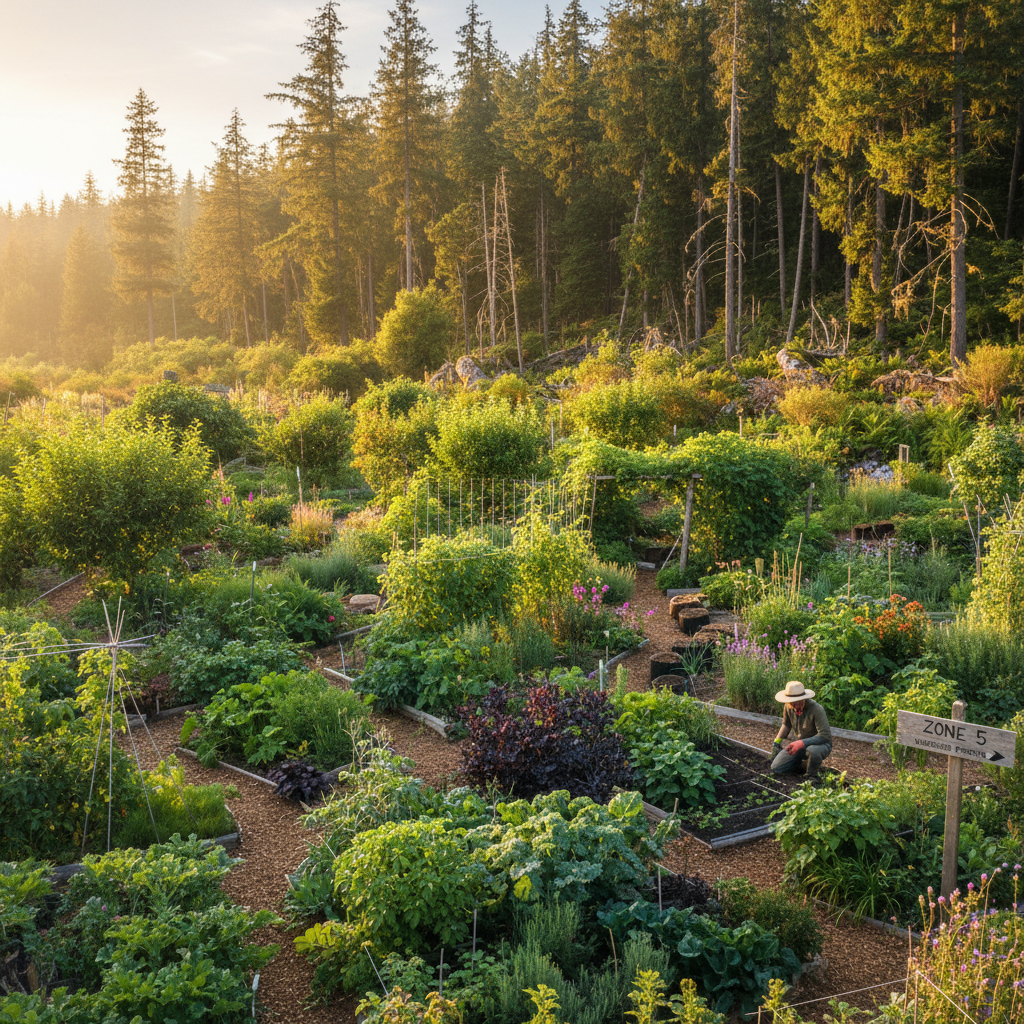
Advanced Permaculture Zone 5: Wilderness Integration
Imagine standing at the edge of your homestead, gazing at the unruly scrub, woods, or meadow beyond your tidy gardens. You've poured heart into zones 1-3—your veggie beds burst with abundance, orchards hum with bees—but permaculture zone 5 wilderness stares back, untapped and chaotic. Invasives creep in, wildlife raids your crops, and you sense missed opportunities for resilience.
This is where advanced zone design shines. Integrating permaculture zone 5 isn't about conquering nature; it's about harmonizing with it. You'll create buffers that protect your core systems while harvesting subtle gifts like forage, timber, and ecosystem services. For small farmers and homesteaders sketching designs, this solves the puzzle of whole-property flow, turning liabilities into assets aligned with permaculture ethics.
Why Advanced Zone 4-5 Design Matters in Permaculture
In permaculture, zones organize energy and attention: Zone 1 for daily herbs, Zone 2 orchards, Zone 3 staple crops. Zone 4 steps into semi-managed wilds—think forage paddocks or silvopasture. Permaculture zone 5 is pure wilderness: untouched preserves fostering biodiversity.
Why prioritize them? First, resilience. Outer zones buffer against climate extremes, pests, and soil erosion, embodying 'observe and interact.' They stack functions—wilderness sequesters carbon, regulates water, and seeds succession back into managed areas.
Second, ethics. Earth care demands native species dominance; people care yields medicinals, wild foods, fuelwood. Fair share? Biodiversity hubs support pollinators vital to Zone 1 yields. Neglect them, and your design fragments—advanced integration weaves a living whole, celebrating small-scale genius.
For planners, this means mapping beyond fences. You'll boost yields 20-30% indirectly via healthier ecosystems, per studies on edge effects. It's practical magic: wilderness as ally, not adversary.
Mapping and Observing Your Zones 4-5 for Advanced Design
Start with observation—the permaculture cornerstone. Walk your outer edges seasonally. Note slopes, soils, water flows, existing natives. Sketch a base map: Zone 4 as transition (e.g., 20-50% managed), Zone 5 as no-intervention core.
Actionable steps:
- Sector analysis: Overlay wind, sun, fire paths. Place Zone 4 windbreaks with native shrubs like Cornus sericea (red osier dogwood) to funnel breezes productively.
- Zone blending: Blur lines. Extend Zone 3 paths into Zone 4 for access without intrusion.
- Scale for you: On 1-5 acres, Zone 4 might be 0.5 acres of forage; Zone 5 the rest. Measure radii from house—Zone 4: weekly visits; Zone 5: yearly.
Use principles: 'relative location.' Position water harvesting swales in Zone 4 to feed Zone 5 seeps. Document invasives for targeted removal—stack with mulch from prunings.
Real-world tip: Homesteaders in temperate zones map Juniperus communis (common juniper) thickets as Zone 4 anchors, gin berries for gin while shielding gardens.
This foundation ensures designs adapt to your unique site, not cookie-cutter ideals.
Selecting and Planting Native Species for Zone 4 Productivity
Zone 4 thrives on natives that yield without annual fuss. Focus on perennials stacking forage, timber, medicine, habitat.
Key selections by function:
- Forage and food: Rubus idaeus (red raspberry), Sambucus nigra (elderberry)—harvest berries, leaves for tea, canes for baskets.
- Timber and fuel: Populus tremuloides (quaking aspen), Acer rubrum (red maple)—coppice for rods, firewood.
- Nectar/pollinator hubs: Asclepias syriaca (common milkweed), Echinacea purpurea (purple coneflower)—butterfly magnets boosting Zone 2 pollination.
Planting how-to:
- Clear invasives selectively—girdle trees, sheet mulch shrubs.
- Guild planting: Cluster nitrogen-fixers like Amelanchier alnifolia (saskatoon serviceberry) with pioneers.
- Succession mind: Early seral like Rubus spp. (brambles) pave for oaks (Quercus alba white oak).
Maintenance: Annual scythe paths for access; rotational grazing if livestock fits. Yields? 100-200 kg firewood/year per acre, plus wild salads. Edges amplify: Plant berms with Viburnum trilobum (highbush cranberry) for bird-attracting buffers.
This applies permaculture zone 5 thinking inward—let natives lead, minimizing inputs.
Creating Productive Edges and Transitions in Advanced Zone Design
Edges are permaculture gold: 'use edges' principle multiplies yields. Zone 4-5 interfaces brim with microclimates—moister shade, warmer sun.
Design edges productively:
- Sunnken lanes/swales: Dig along Zone 3-4 boundary. Plant Aronia melanocarpa (black chokeberry) on berms—berries, erosion control.
- Fedge (fence+hedge): Native Corylus americana (American hazelnut) rows double as wildlife corridors, nut harvest.
- Vertical layering: Canopy (Juglans nigra black walnut), shrub (Physocarpus opulifolius ninebark), groundcover (Carex pensylvanica Pennsylvania sedge).
Wilderness integration: Let Zone 5 'seed' edges naturally. Scatter Quercus acorns from wild stands into Zone 4. Monitor invasives—'small and slow solutions.'
Benefits: Edges yield 2-3x more biomass. Suburban plot? Edge your back fence with Symphoricarpos albus (snowberry) for snowberry jam, rabbit forage.
Action: Sketch 3 edge types on your map this week. Plant one test guild.
Succession Planning and Wildlife Integration for Zone 5
Permaculture zone 5 wilderness evolves via succession—your design respects it. No digging; observe pioneers (Pinus banksiana jack pine) to climax forest.
Succession strategies:
- Protect core: Fence if needed, but allow wildlife passage—gaps for deer trails.
- Harvest lightly: Twig prunings, mushrooms (Ganoderma tsugae reishi on snags), nuts without depleting.
- Fire/ disturbance mimic: Controlled burns in adjacent Zone 4 to reset succession, favoring natives.
Wildlife stacking:
- Birds/bees: Deadwood snags for Melilotus officinalis? No—natives like Solidago rugosa (wrinkly goldenrod).
- Mammals: Mast crops (Carya ovata shagbark hickory) draw squirrels, dropping nuts to Zone 4.
- Amphibians: Pond edges blending to Zone 5 seeps.
Long-term: Zone 5 regenerates soils via mycorrhizae, fungi networks feeding inner zones. Track with annual photos—adapt as needed.
For homesteaders: This builds antifragility. Drought? Zone 5 refugia repopulate.
Monitoring, Adapting, and Scaling Advanced Zone Integration
Advanced designs evolve—'produce no waste' via feedback loops.
Monitoring toolkit:
- Journals: Species lists, yields, wildlife sightings.
- Transects: Walk lines quarterly, note changes.
- Indicators: Native diversity up? Success.
Adapt: Invasives surge? Intensify Zone 4 grazing. Yields lag? Adjust edges.
Scaling: Start small—one Zone 4 guild. Expand as patterns emerge. Suburban? Zone 5 is your woodlot or park buffer.
Celebrate wins: First elderberry harvest from wilderness edge? Proof your design lives.
Key Takeaways
- Integrate permaculture zone 5 by observing sectors and blurring zone edges for resilience and yields.
- Prioritize native species like Rubus idaeus and Quercus alba in Zone 4 for stacked functions: forage, habitat, succession.
- Leverage edges with swales, fedges (Corylus americana), and guilds to multiply productivity 2-3x.
- Succession planning in Zone 5 preserves biodiversity; light harvests (nuts, medicinals) without disruption.
- Monitor quarterly, adapt slowly—advanced zone design is iterative, site-specific magic.
- Aligns ethics: Earth care via natives, people care via subtle abundance, fair share through ecosystem services.
Next Steps
Grab paper: Sketch your full-zone map, marking 4-5 boundaries and one edge intervention.
Observe this weekend: Walk outer areas, list 5 natives and invasives.
Plant test: Source 3 natives for a Zone 4 guild—install next month.
Join forums: Share your map sketch for feedback.
Revisit in 6 months: Note changes, refine. Your wilderness awaits!
Curated by
Daniel Crawford
Regenerative Systems Designer