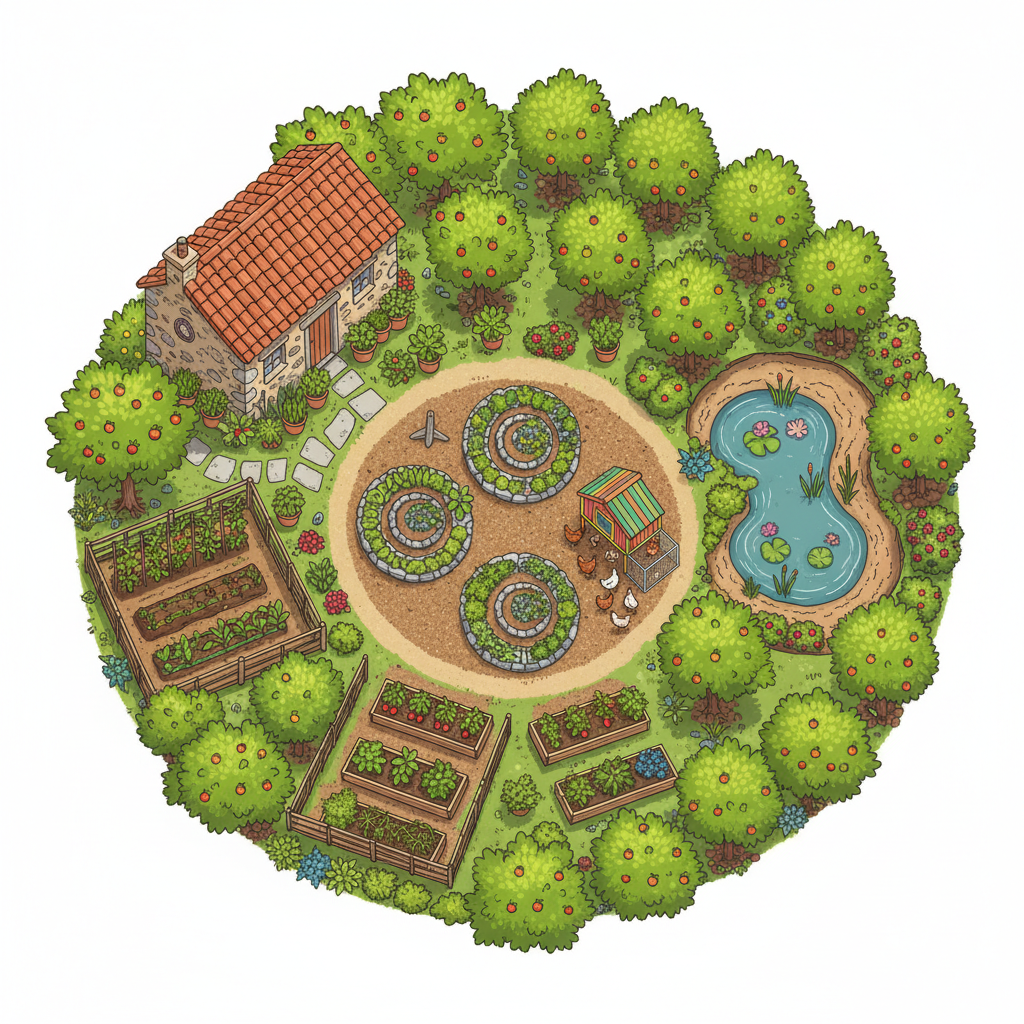
Map Permaculture Zones 0-2: Winter Beginner Guide
Perched by your window on a chilly winter day, you're dreaming of a buzzing permaculture garden. But where do you start with permaculture zones? As a beginner, mapping zones 0-2 first solves the overwhelm. These zones cover your home (Zone 0), daily picks (Zone 1), and frequent harvests (Zone 2)—the high-traffic areas needing smart design.
Winter's perfect for this. No digging, just observing sun paths, wind, and slopes from indoors. You'll avoid costly mistakes, like planting thirsty crops far away. Imagine harvesting eggs and herbs without trekking through mud. This guide gives you actionable steps to sketch these zones, embracing permaculture ethics like earth care and people care.
Whether you're a suburban gardener or homesteader, small wins here build momentum. Grab paper—let's zone map your way to abundance.
What Are Permaculture Zones and Why Map Them in Winter?
Permaculture zones divide your space by use frequency. Zone 0 is your house. Zone 1 holds daily needs like veggies and chickens. Zone 2 has fruit trees you check often. Outer zones go less visited.
Why map now? Winter lets you observe and interact—a core permaculture principle—without summer distractions. Note frost pockets, sunny spots, and door flows. Planning prevents redesigns, saving time and money.
For beginners, zones make design intuitive. They prioritize energy efficiency: place high-maintenance plants closest. This aligns with fair share by maximizing yields on small plots.
Native species thrive here, needing less water. Mapping Zones 0-2 builds a resilient base, celebrating your scale. No huge farm needed—suburban lots shine.
Assess and Map Your Zone 0: The Home Hub
Zone 0 is your house and immediate surrounds. It's the heartbeat, demanding daily attention.
Winter Observation: Sit indoors. Sketch doors, windows, patios. Note sun angles—south-facing walls get heat-loving plants. Track wind; plant windbreaks nearby.
Key Elements:
- Compost bins (easy access for scraps).
- Rain barrels under downspouts.
- Potting bench by back door.
Connect to principles: People care means ergonomic paths—no steep climbs with heavy loads.
Action Steps:
- Measure house footprint.
- Mark microclimates: shady north side vs. sunny south.
- List needs: worm bin? Greywater system?
Place your house polygon first. Consider native evergreens like Juniperus communis (common juniper) for Zone 0 windbreaks. Natives support local wildlife, boosting biodiversity.
Beginner Tip: Start small. If suburban, use driveway edges. This zone sets flow—get it right, and everything clicks.
Design Zone 1: Your Daily Harvest Haven
Zone 1 is steps from your door. Daily veggies, herbs, poultry—high input/output.
Why Prioritize: Frequent visits mean efficiency rules. Place soft fruits, salad greens here.
Winter Planning: From your map, buffer Zone 0 by 10-20 feet. Note soil: test drainage by poking sticks in snowmelt puddles.
Plant Picks (Native Focus):
- Herbs: Monarda fistulosa (wild bergamot) for teas, pollinators.
- Greens: Urtica dioica (stinging nettle)—nutritious, but handle gloves!
- Berries: Native serviceberry (Amelanchier alnifolia).
- Chickens: Coop with run, compost below for fertility.
Layout Tips:
- Keyhole beds for reach.
- Vertical: trellises on fences.
- Paths: Mulch wide (2 ft) for wheelbarrows.
Permaculture principle: Catch and store energy—add solar dehydrator here.
On Your Map: Ring Zone 1 around 0. Place plant icons; observe sun shadows. Adjust for your climate—natives like these reduce work.
Small-Scale Win: Even a 10x10 plot yields salads year-round with cold frames. Celebrate: first harvest feels magical.
Layout Zone 2: Frequent Forages and Fruits
Zone 2 extends further: orchards, staple crops you visit 2-3 times weekly.
Zone Thinking: Less daily, so perennials dominate. Think apples, berries, nuts.
Winter Assess: Walk edges (safely). ID slopes for swales—water-holding ditches. Note views for aesthetics.
Essential Features:
- Fruit trees: Native pawpaw (Asimina triloba) or elderberry (Sambucus canadensis).
- Perennial veggies: Asparagus (Asparagus officinalis), rhubarb (Rheum rhabarbarum).
- Ponds or ponds edges for ducks.
Guild Design: Stack functions. Tree + understory nitrogen-fixers like native ceanothus (Ceanothus spp.) + groundcover strawberries.
Paths and Access: Curved, mulched paths link to Zone 1. Principle: Use edges—hughes for more yield.
Extend your zone ring. Layer guilds. Preview yields; tweak for natives.
Beginner Encouragement: Don't perfect trees yet—space them 10-15 ft. Winter sketches evolve; iterate. Your homestead glows with these.
Integrate Water, Soil, and Wildlife Across Zones 0-2
Zones connect via flows: water, nutrients, you.
Water Mapping: Start Zone 0 gutters → Zone 1 basins → Zone 2 swales. Winter: trace roof runoff.
Soil Building: Sheet mulch everywhere. Add natives like comfrey (Symphytum officinale) for chop-drop.
Wildlife Corridors: Plant berries linking zones. Ethics: Fair share with birds via Ilex verticillata (winterberry).
Lists for Success:
- Water: Diversion drains, ponds.
- Soil: Worms in Zone 0 bins feed all.
- Animals: Integrate chickens (Zone 1) to till Zone 2.
Observe Winter Clues: Snow melt reveals low spots.
Draw swales as lines; observe water flow. Place natives precisely.
This integration embodies obtain a yield. Beginners: Focus one flow first, like water. Boom—your design lives.
Advanced Touches: Guilds and Microclimates in Zones 0-2
Layer for resilience.
Guilds: Plant communities. Zone 1 example: Tomato + basil + borage + native Echinacea purpurea (coneflower).
Microclimates: South walls (Zone 0) for figs; north for ferns.
Winter Action: List 3 guilds per zone.
Key Takeaways
- Permaculture zones prioritize: Zone 0 home, 1 daily, 2 frequent—map from inside this winter.
- Observe sun, wind, water first; natives like Monarda fistulosa boost ecology.
- Use keyhole beds (1), guilds (2), swales across.
- Color zones, observe shadows, place natives.
- Principles: Observe/interact, catch energy, stack functions.
- Small plots win: 10x10 Zone 1 feeds families.
- Connect flows: Compost Zone 0 → soil all zones.
- Celebrate: Sketch today, harvest tomorrow.
Next Steps
- Sketch Zones 0-2 on paper (30 mins).
- Consider uploading your lot to a map-based design tool.
- Pin 5 natives you'd like to include.
- Share your map in a community forum.
Spring awaits—start mapping! [Read: Zone 3-5 Advanced] or [Winter Soil Prep].
(Total: 1350 words)
Curated by
Daniel Crawford
Regenerative Systems Designer