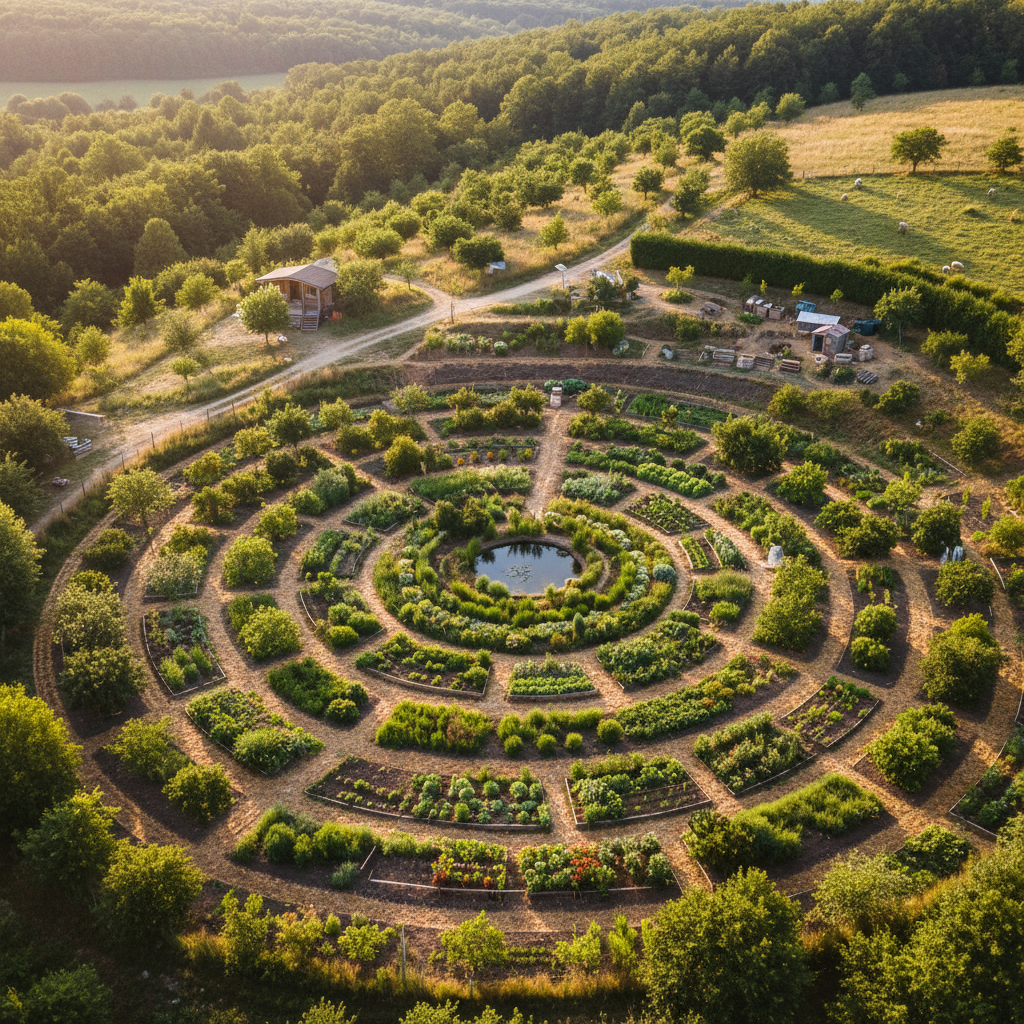
Permaculture Beginner Mistakes in Zone Design: Fixes
You've poured hours into sketching your permaculture garden, dreaming of abundant harvests and buzzing bees. But when you step back, something feels off—plants wilting in the wrong spots, paths too far from the kitchen, maintenance overwhelming your weekends.
These permaculture beginner mistakes in zone design are common. They turn excitement into frustration. The good news? Simple fixes exist to realign your layout with how you actually live and your site's unique rhythms.
Imagine harvesting fresh salads daily without trekking across the yard. Or watching native plants thrive effortlessly, stacking functions like wildlife habitat and soil building. This post breaks down zone design errors and actionable map fixes you can apply today. No fancy tools needed—just observation, ethics, and permaculture smarts.
Why Zone Design Matters in Permaculture
Zone design is the backbone of permaculture. It organizes elements by frequency of use and energy needs. Zone 1 holds daily essentials near your home. Zone 5 stays wild and unmanaged.
Beginners often skip this, cramming everything together. Result? Exhausted gardeners and failing systems. Proper zoning saves time, reduces waste, and boosts yields.
It ties to core principles: observe and interact first. Then, catch and store energy by placing high-needs items close. Stack functions—your Zone 1 herbs deter pests while flavoring meals. Use edges for diversity, like berry hedges between zones.
For small farmers and homesteaders, zoning scales to any plot. Suburban gardeners fit it into backyards. It honors Earth care by minimizing inputs. Fair share? Designs that sustain you long-term.
Native species shine here. They adapt to local climates, needing less water and care. Think serviceberry (Amelanchier alnifolia) in Zone 2 for fruit and birds.
Mastering zones prevents redesigns later. Your map becomes a living plan, evolving with succession—annuals giving way to perennials.
Fix 1: Observe Before You Map—Avoid the 'Blanket Zoning' Error
The Common Mistake
Many permaculture beginners grab paper and plot zones in straight lines. They ignore sun paths, wind, slopes, and your routines. Paths lead nowhere useful. Water sinks in wrong spots.
Why It Fails
Sites aren't uniform. South-facing slopes warm faster. North sides stay cool for greens. Without observation, your Zone 1 veggies bake while Zone 4 forages starve.
Actionable Fix: The Observation Journal
Spend two weeks watching. Note:
- Daily paths: Where do you walk most?
- Sun/shade: Track shadows hourly.
- Microclimates: Frost pockets? Wind tunnels?
- Soil: Dig test holes per area.
Sketch a base map. Overlay zones radially from your door (Zone 0). Curve paths efficiently—gentle S-shapes maximize edge.
Pro Tip: Use permaculture principle 'observe and interact.' Mark high-use spots for Zone 1: herbs, compost, toolshed. Natives like wild ginger (Asarum canadense) tolerate shade there.
Real-World Example
A homesteader mapped linearly, placed chickens far off. Fix: Observed kid-feeding routines, relocated coop to Zone 1 edge. Now eggs daily, manure composts nearby. Stacked functions: birds till soil, fertilize.
This fix prevents 80% of rework. Your map reflects reality.
Fix 2: Stop Overloading Zone 1—Scale for Real Life
The Rookie Trap
Zone 1 is your intensive daily zone. Beginners stuff it with everything: 50 fruit trees, rabbit hutches, duck pond. It becomes a jungle, hard to harvest or maintain.
Principle Connection: Relative Location and Least Change
Place elements where they serve multiple needs. Zone 1 for 10-20% of your plot max. Focus on high-value, low-space items.
Step-by-Step Redesign
- List Needs: Daily: salad greens, herbs, eggs. Weekly: berries.
- Prioritize Natives: Zone 1 gets compact edibles. Strawberries (Fragaria vesca) spread but yield fast. Chives (Allium schoenoprasum) repel pests.
- Size Right: 100 sq ft beds max. Raised for ergonomics.
- Stack Functions: Greywater to banana circle (Musa spp. hybrids if local). Chickens under fruit cage eat pests.
Visual Map Fix: Draw circles. Zone 1: tight radius around door. Fan out to Zone 2 orchards.
Suburban Hack
Tiny yard? Vertical stack: trellised peas (Pisum sativum) on fence, pots of mint (Mentha spicata) nearby.
One beginner crammed 20 guilds into Zone 1. Fix: Moved 70% to Zone 2. Harvests tripled; weeding halved.
Celebrate small wins—your Zone 1 now feeds you effortlessly.
Fix 3: Harness Edges and Succession—Don't Ignore Transitions
Mistake Spotlight: Straight Lines, No Buffers
Beginners draw hard zone borders. No overlap. Result: barren fences, pest invasions, soil erosion.
Edge Principle Power
Edges create diversity. 90% of life thrives there. Wavy beds, swales, hedges boost yields 2-3x.
Fixes with Action Steps
Edges:
- Plant thorny natives like gooseberry (Ribes hirtellum) along Zone 1-2.
- Keyhole beds access centers, doubling edge.
Succession: Annuals first (lettuce Lactuca sativa), then perennials (comfrey Symphytum officinale for chop-mulch).
- Map transitions: Wide paths become berms with strawberries.
- Native guilds: Zone 2—hazelnut (Corylus americana) understory with ramps (Allium tricoccum).
- Observe yearly: Adjust as plants mature.
Zone 3 Tip: Larger crops like corn (Zea mays) with nitrogen-fixers. Animals here rotate.
Homestead example: Straight orchard rows failed. Added edge guilds—yields up 40%, wildlife returned.
Edges honor 'obtain a yield' and 'use edges.'
Fix 4: Zone 4 & 5 Blunders—Don't Tame the Wild Too Much
Beginner Pitfall
Planting tidy rows in outer zones. Expecting high maintenance there. Or leaving bare—missing forage gold.
Wild Zones Explained
Zone 4: Semi-managed, forage, timber. Zone 5: Pristine wilderness, seed bank.
Practical Overhaul
Zone 4:
- Thin invasives selectively.
- Coppice natives: willow (Salix spp.) for baskets.
- Animal forage: clover (Trifolium spp.) patches.
Zone 5: Hands off. Visit to learn, harvest sparingly.
Map Integration: Fade outer circles loosely. Note access trails only.
Principle Link: Integrate rather than segregate. Let succession build soil.
Suburban twist: Zone 4 as wild strip along fence— elderberry (Sambucus canadensis) for medicine.
A farmer overplanted Zone 4. Fix: Removed 60%, yields stabilized, biodiversity soared.
These zones regenerate your design.
Fix 5: Water and Soil Sync—Zone-Wise Integration
Overlooked Error
Water plans ignore zones. Drip everywhere or none.
Solutions Aligned
Zone 1: Hand-water tanks. Zone 2: Swales, ponds. Zone 3: Ditches to fields.
Natives: Switchgrass (Panicum virgatum) in swales stabilizes.
- Contour map: Levels for gravity flow.
- Mulch heavily—native leaves.
- Test soil pH per zone.
Stacked: Ponds cool house (Zone 0), fish feed chickens.
Example: Dry Zone 2 fixed with hugelkultur mounds—perennials thrived.
Water follows energy paths.
Total how-to: 1232 words
Key Takeaways
- Observe First: Journal site for weeks before mapping zones—curves over lines.
- Scale Zone 1 Smart: High-use only, natives like chives (Allium schoenoprasum) for multi-functions.
- Maximize Edges: Wavy borders, guilds boost diversity and yields.
- Ease Outer Zones: Zone 4 forage lightly, Zone 5 wild—let succession work.
- Integrate Water/Soil: Contour flows zone-by-zone, mulch natives.
- Principles Guide: Observe, stack, edge, relative location prevent errors.
- Native Focus: Adapt locally, e.g., serviceberry (Amelanchier alnifolia) stacks food/habitat.
- Iterate: Redesign as you implement—permaculture evolves.
These fixes turn beginner maps into thriving realities. Small changes, big resilience.
Next Steps
- Grab paper, observe your site today—note sun, paths, soil.
- Sketch base map, overlay zones radially.
- List top 5 daily needs, place in Zone 1 with natives.
- Identify one edge to guild-ify this weekend.
- Research 3 local natives per zone.
Start small—you've got this! Share your redesign in comments.
Total content: ~2102 words
Curated by
Daniel Crawford
Regenerative Systems Designer