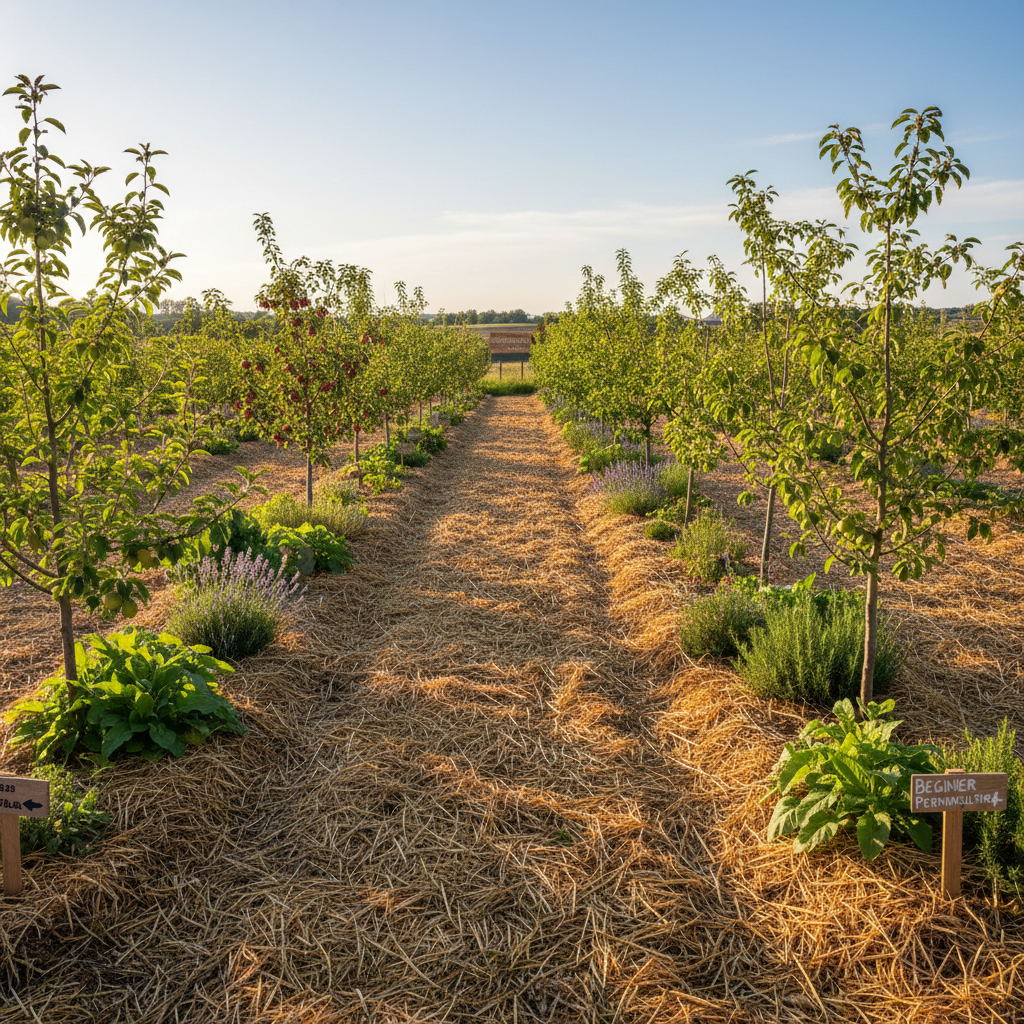
Zone 3 Permaculture Orchards: Beginner Mapping Tips
Picture this: You've got a patch of land on your homestead or small farm, and you're dreaming of an orchard bursting with apples, pears, and berries. But where do you plant them? Zone 3 permaculture is your answer for that sweet spot of productivity without daily attention. As a beginner, mapping your zone 3 orchard feels overwhelming—until you break it down into simple steps.
You're not alone. Many new permaculture enthusiasts stare at their property, sketchpad in hand, wondering how to turn vision into reality. The good news? With basic zone thinking, observation, and a focus on native species, you can design an orchard that feeds your family for years. This guide walks you through beginner-friendly mapping tips, rooted in timeless permaculture principles like observe and interact, catch and store energy, and obtain a yield.
What is Zone 3 Permaculture and Why Orchards Thrive There
In permaculture design, zones organize your space based on frequency of use and energy needs. Zone 1 is your intensive kitchen garden, visited daily. Zone 2 holds soft fruits and herbs, checked weekly. Zone 3 permaculture? That's the realm of larger perennials like orchards, needing only seasonal care.
Zone 3 is semi-wild, productive land farther from your home—think 100 to 500 feet out, depending on your property size. It's ideal for fruit and nut trees because they stack functions beautifully: providing food, habitat, windbreaks, and soil builders. Why does this matter for beginners?
Orchards in zone 3 permaculture reduce labor. Mature trees need pruning once a year, mulch occasionally, and harvest seasonally. They mimic natural woodlands, building resilience against pests and drought. Plus, they align with permaculture ethics: earth care through deep roots that prevent erosion, people care via nutritious yields, and fair share by supporting pollinators and wildlife.
Neglect zone 3 mapping, and you risk poor sunlight, water issues, or mismatched species. Get it right, and your orchard becomes a low-input powerhouse. Suburban gardeners with quarter-acre lots can dedicate a sunny slope; homesteaders might allocate an acre. The key? Observe your site first.
Mapping Your Property for Zone 3: Start with Observation
Before drawing lines, observe. Permaculture's first principle—observe and interact—means spending time on your land. Walk it at dawn, noon, dusk, across seasons. Note sun paths, wind patterns, soil types, and water flow.
Grab a notebook or use a simple map-based planning tool. Sketch your property's boundaries, home, paths, and existing features like fences or sheds. Mark Zones 1 and 2 first: herb spirals near the door, berries along paths.
Now, identify zone 3 permaculture areas. Look for:
- Sunny slopes: South-facing (northern hemisphere) for maximum light.
- Protected spots: Sheltered from prevailing winds by hedges or buildings.
- Well-drained soil: Test by digging holes; avoid waterlogged lows.
Use a compass app for orientation. Trace contours—slight slopes aid drainage and frost avoidance. Frost pockets in valleys kill blossoms; map elevations roughly with a level line of string between stakes.
Action step: Spend a week logging data. Shade trees in summer? Mark them. Wet springs? Note for swales. This beginner mapping tip prevents costly replants. Your zone 3 orchard map emerges from real patterns, not guesses.
Divide your sketch into zones. Zone 3 might be a 50x100 foot rectangle behind the veggie patch. Pencil in access paths—wide enough for wheelbarrows, mulched to suppress weeds.
Selecting Native Species for Your Zone 3 Orchard
Native trees are permaculture gold for zone 3. They thrive in local climates, resist pests, and support biodiversity. Skip exotic imports; choose species evolved to your region.
Start with canopy trees for structure. In eastern US, consider serviceberry (Amelanchier arborea)—early fruit for birds and you, plus fall color. Pawpaw (Asimina triloba) offers tropical flavors in temperate zones.
Western homesteaders: Pacific crabapple (Malus fusca) or chokecherry (Prunus virginiana). Add nuts like American persimmon (Diospyros virginiana) or hazelnut (Corylus americana) for protein-rich yields.
Space them 15-30 feet apart, depending on mature size. Underplant with guilds—companion groups that stack functions.
Beginner Guild Example:
- Canopy: Apple (Malus domestica—choose disease-resistant natives like Arkansas Black).
- Shrubs: Elderberry (Sambucus canadensis), currant (Ribes spp.).
- Groundcover: Strawberry (Fragaria vesca), comfrey (Symphytum officinale) for mulch.
- Climbers: Kiwi (Actinidia arguta) on trunks.
- Root: Daikon radish to break soil.
Natives like these fix nitrogen, attract pollinators, and deter pests. Map guilds in clusters: one tree per family of four yields plenty.
Research your ecoregion via USDA zones or local extension services. List 5-10 species, note heights, spreads, and harvest times for succession—staggered ripening means months of fruit.
Designing Layout: Edges, Swales, and Succession
Permaculture loves edges—where diversity explodes. In zone 3 permaculture orchards, create edges with berms, paths, and hedges.
Swales for Water: On contours, dig shallow ditches (2 feet wide, 1 foot deep) with berms downhill. Plant trees above berms to catch runoff. This "catch and store energy" principle hydrates passively.
Path Networks: Curved paths mimic nature, revealing surprises. Mulch with woodchips from prunings.
Succession Planning: Young orchards need pioneers. Map fast-growers like mulberry (Morus rubra) first, then slower oaks. In 5 years, pioneers shade out; succession builds resilience.
Sketch a bubble diagram: Circles for trees, lines for paths/swales. Place tallest trees north, dwarfs south for light. Windbreaks on west: native plums (Prunus americana).
Stack Functions:
- Trees as trellises for vines.
- Fallen leaves mulch paths.
- Branches for coppice crafts.
Test your map: Walk it mentally. Can you harvest without trampling? Does it flow from zone 2?
Integrating Animals and Maintenance in Zone 3
Zone 3 permaculture isn't just plants—integrate animals for fertility. Chickens roam under trees, eating pests and fertilizing. Ducks in swales control slugs.
Map fenced paddocks or mobile coops. Bees near blossoms boost pollination.
Annual maintenance:
- Prune in dormancy: Open centers for light.
- Mulch 6 inches deep: Woodchips or straw.
- Sheet mulch bare soil: Cardboard, compost, leaves.
Pest management: Encourage predators. Plant nectar-rich edges: Milkweed (Asclepias spp.) for butterflies.
For beginners, start small—10 trees. Expand as you learn. Your map evolves; revisit yearly.
Common pitfalls: Overcrowding (map mature sizes), ignoring microclimates (test soil pH), skipping diversity (monocrops fail).
Key Takeaways
- Zone 3 permaculture is for low-maintenance orchards; observe site first for sun, wind, water.
- Use native species like Amelanchier arborea and guilds to stack functions and build resilience.
- Map with swales, edges, paths; apply principles like succession and obtain a yield.
- Start small: Sketch bubbles, test layouts, integrate animals for holistic design.
- Celebrate progress—your first harvest proves the design works.
Next Steps
- Observe your property this week: Note sun, soil, slopes.
- List 5 native trees for your area; sketch a rough zone 3 map.
- Walk your design path: Adjust for access.
- Plant one test tree or guild to build confidence.
Your zone 3 orchard awaits—happy mapping!
Curated by
Daniel Crawford
Regenerative Systems Designer