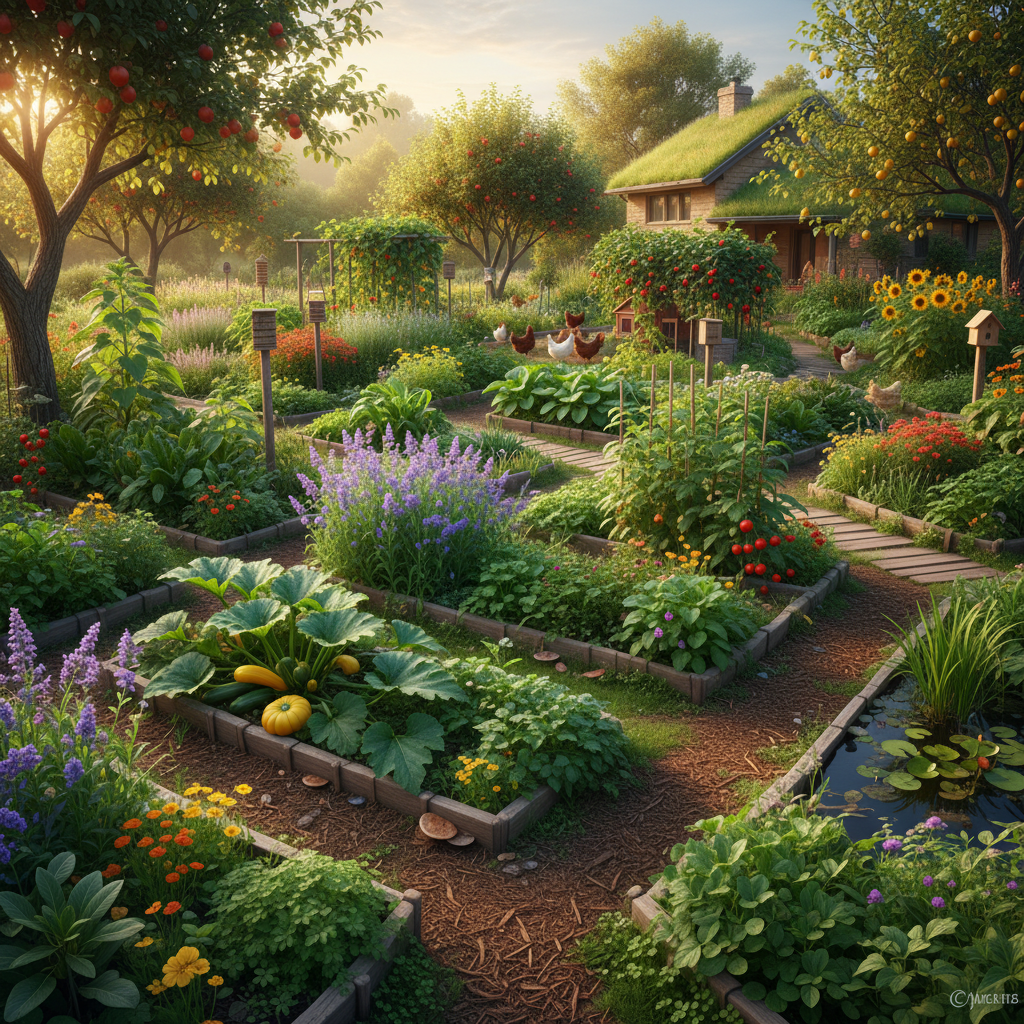
Getting Started with Permaculture Design Principles
Picture this: You're staring at your suburban yard, dreaming of fresh veggies, fruits, and flowers without the daily grind of mowing, watering, and fertilizing. But overwhelm hits—where do you even start? Permaculture offers a lifeline.
These design principles turn chaos into harmony, creating gardens that feed you, nurture wildlife, and regenerate soil. No more battling nature; instead, you work with it. For small farmers, homesteaders, and backyard enthusiasts, permaculture means sustainable gardening that saves time and money.
You'll plan zones from your doorstep (Zone 1) to wild edges (Zone 5), stacking plants for multiple yields. Ready to ditch the chemical sprays and endless toil? Let's dive in and design your resilient paradise. (148 words)
Why Permaculture Design Principles Matter for Beginners
Permaculture isn't just gardening—it's a philosophy mimicking nature's patterns for abundance. Coined by Bill Mollison and David Holmgren, it rests on three ethics: Earth care, people care, and fair share. Design principles guide you to apply these practically.
Why start here? In a world of climate shifts and rising costs, these principles build resilience. Your garden produces food, cleans water, and sequesters carbon—all while needing less input. Beginners love how they celebrate small wins, like harvesting native berries from day one.
Observe first: Every site is unique—sun, wind, soil dictate success. Then integrate principles like 'stack functions' (one plant shades, feeds bees, and fixes nitrogen) and 'use edges' (most life thrives at boundaries).
Sustainable gardening becomes effortless as succession planning ensures year-round yields. You'll cut waste, boost biodiversity, and create self-sustaining systems. Whether homesteading acres or a patio plot, these timeless tools empower you. (198 words)
Principle 1: Observe and Interact – Map Your Site with Zones
Start with the foundational permaculture principle: Observe and Interact. Spend weeks watching your space. Note sun paths, wind patterns, wet spots, and wildlife trails. This isn't busywork—it's your blueprint for success.
Divide into zones based on use frequency. Zone 1: Daily access, like herbs by your door (e.g., native oregano, Origanum vulgare). Zone 2: Frequent veggies and berries (native serviceberry, Amelanchier canadensis). Zone 3: Orchards and staples (native pawpaw, Asimina triloba). Zone 4: Semi-wild forage. Zone 5: Untouched wilderness for learning nature's lessons.
Action steps:
- Sketch a base map: Measure your plot, add north arrow, overlay zones.
- Track data: Log sunrise/sunset, frost dates, soil pH (test kits are cheap).
- Interact daily: Walk barefoot, listen to birds, feel soil moisture.
Incorporate edges between zones—plant guilds here (e.g., comfrey deepens soil, attracts pollinators). Natives shine: They need no babying, supporting local bees and birds. This zoning saves steps; salad greens steps from your kitchen, chickens in Zone 2.
Beginners, celebrate micro-observations. One homesteader spotted a frog pond spot—now it's a frog haven filtering runoff. Your site speaks; listen, and design flows. (248 words)
Principle 2: Catch and Store Energy – Harness Water, Sun, and Soil
Energy flows everywhere—sunlight, rain, wind. The principle 'Catch and Store Energy' teaches you to capture it before it flees. No more wasted runoff or barren soil.
Water mastery: Swales (shallow ditches on contour) slow and sink rain. In Zone 1, rain barrels collect roof runoff for drip irrigation. Mulch everything—native leaf litter mimics forests, holding moisture.
Sun and heat: South-facing Zone 1 maximizes light. Plant deciduous trees (native red maple, Acer rubrum) for summer shade, winter sun. Solar dehydrators dry herbs for winter.
Soil energy: Compost piles in Zone 2 turn scraps into gold. Chickens till and fertilize. Inoculate with mycorrhizal fungi for native perennials like coneflower (Echinacea purpurea).
Actionable plan:
- Install gutters to barrels (start small, one per downspout).
- Dig a 1-foot swale every 10 feet downhill; line with rocks.
- Sheet mulch beds: Cardboard, compost, straw, then natives.
- Track energy: Note driest spots for ponds.
Stack functions: A pond stores water, cools air, breeds fish (native bluegill if suitable). Beginners, this principle scales—patio pots with gravel bases catch drips. Your sustainable garden now pulses with stored bounty. (262 words)
Principle 3: Obtain a Yield – Stack Functions with Native Plants
Permaculture demands yields now, not someday. 'Obtain a Yield' ensures every element produces—food, medicine, habitat. Stack functions: Nitrogen-fixing peas (Pisum sativum) feed soil and you.
Prioritize natives for resilience. Zone 1: Native strawberries (Fragaria vesca)—groundcover, fruit, erosion control. Zone 2: Elderberry (Sambucus canadensis)—berries, bird food, medicinal. Zone 3: Hazelnut (Corylus americana)—nuts, wildlife corridor.
Guild design: Core tree (native apple, Malus spp.), understory berries, groundcover herbs, climbers like native grapes (Vitis riparia). Each supports others—shade, pest control, pollination.
Succession planting: Spring garlic, summer tomatoes, fall kale. Perennials reduce replanting. Chickens yield eggs, manure, bugs eaten.
Get yielding steps:
- List needs: Food (salad daily), medicine (chamomile tea).
- Inventory assets: Sunny slope? Fruit trees.
- Plant polycultures: 3-5 species per bed.
- Harvest early: Microgreens in week 1.
Small-scale joy: A suburban bed with native bee balm (Monarda fistulosa) yields tea and buzz. Troubleshoot low yields by adding diversity. Abundance starts small—pick that first berry and grin. (238 words)
Principle 4: Apply Self-Regulation and Accept Feedback – Build Resilience
Nature self-regulates; so must your design. This principle loops feedback: Too many pests? More birds via natives. Overgrowth? Chickens prune.
Succession planning: Pioneer plants (annuals) build soil; perennials follow. Zone 4 natives like goldenrod (Solidago spp.) prep for trees.
Edge power: 'Use and Value the Marginal'—edges create microclimates. Plant natives along fences: Black-eyed Susan (Rudbeckia hirta) for edges.
Feedback loops: Journal yields, pests, health. Adjust: Muggy? More airflow natives. Drought? Deeper roots like native bluestem grass (Andropogon gerardii).
Resilience actions:
- Introduce predators: Bird baths, bat boxes.
- Rotate guilds yearly.
- Minimal inputs: No-till, chop-and-drop mulch.
- Community: Share seeds with neighbors.
Homesteaders thrive here—systems mature, needing less you. Beginners, embrace 'oops' moments; a flop teaches more than theory. Your garden evolves, tougher each year. (212 words)
Principle 5: Use and Value Diversity – Native Species for Thriving Ecosystems
Diversity is permaculture's superpower. Monocrops fail; polycultures flourish. Lean on natives—they're adapted, supporting food webs.
Zone 1 diversity: Herbs, edibles, pollinators. Zone 5: Let weeds teach (often natives in disguise).
Produce no waste: Everything cycles—kitchen scraps to worms, worm castings to beds.
Action steps:
- Audit: Count species; aim for 20+ per zone.
- Native swaps: Ditch lawn for buffalo grass (Bouteloua dactyloides).
- Layers: Canopy, shrub, herb, root, climber, ground.
Celebrate: A diverse plot resists drought, pests. Suburban win: Native milkweed (Asclepias syriaca) for monarchs, plus beauty. Scale to your plot—diversity fits anywhere. (152 words)
Key Takeaways
- Observe first: Map zones (1-5) based on use; natives like serviceberry (Amelanchier canadensis) fit perfectly.
- Catch energy: Swales, barrels, mulch store water/sun/soil power.
- Yield now: Stack functions in guilds—berries, herbs, nitrogen-fixers.
- Self-regulate: Feedback from pests/yields guides tweaks; edges boost life.
- Diversify: Natives ensure resilience, ethics in action.
- Small starts win: Zone 1 herbs yield fast confidence.
- Principles interconnect: Observation informs all.
These bullets are your permaculture cheat sheet. Print, pin up, design daily. (138 words)
Next Steps
Grab paper, sketch your zones today. Source native seeds/plants from local nurseries. Observe one week—no planting yet.
Join permaculture groups for swaps. Start a Zone 1 bed: Herbs, mulch, done. Track in a journal.
In 30 days, you'll harvest and iterate. Your sustainable garden awaits—dig in! (78 words)
(Total: 2074 words)
Curated by
Daniel Crawford
Regenerative Systems Designer